Borrowed Time: Who Really Benefits from Lower Fuel Taxes
Following the US-Israeli attacks against Iran, Tehran responded by closing the Strait of Hormuz - a chokepoint through which roughly 30% of the world's oil supply passes. This has caused immense human suffering as the death toll rises every day in the wake of failed negotiation attempts.
By Bastiaan van Hoorn
Closer to home, this is the second war in five years that directly and severely impacts our economy, and with that, the price of fuel, food, medicines and so many other things that depend on those in turn. We could have been better prepared, but we were not. And right now, many of us feel these preventable conflicts directly in our wallets. We are rightfully looking to the government for help.
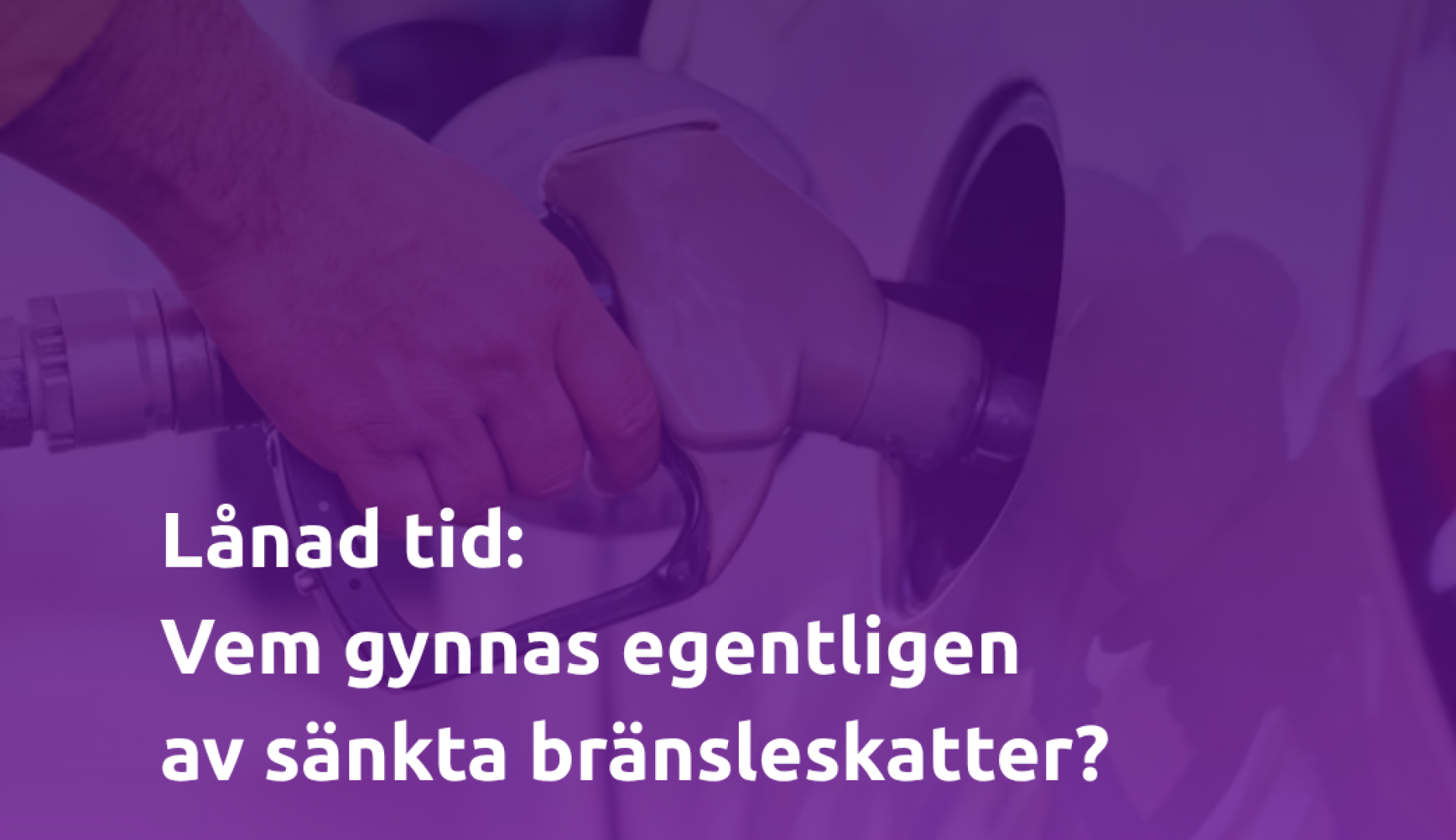
The Swedish government, like many others, is considering lowering the tax on fuel so that everyone can still afford to drive to work, earn their monthly wage, and have enough left over to pay rent. To cover the cost of this tax cut -because cutting taxes costs money - the government wants to borrow from capital markets. And why not, right? This is a crisis. We can pay it back later.
Except we can't. And even if we could, we shouldn't.
A Solution That Solves Nothing
The fundamental problem with a fuel tax cut is that it doesn't actually fix anything. It doesn't increase the supply of fuel, it doesn't reduce our dependence on volatile global markets, and it doesn't change the behaviour that made us vulnerable in the first place. It just makes a painful situation slightly less painful for a little while. Long enough, perhaps, to get through an election cycle.
The alternatives are less glamorous, but they are real. Investing in public transport reduces how many of us need to fill a tank at all. Subsidising EV infrastructure shifts the ground beneath the fuel market. Supporting a more localised economy means fewer supply chains running on diesel across three continents. Lowering income taxes gives workers and employers a bit more breathing room without funnelling money directly into the pockets of oil companies. These are the kinds of changes that actually move the needle: not next quarter, but over the next decade.
Yes, they are harder to explain on a campaign poster. Yes, they take longer to feel. But governing is not the same as campaigning, and a government that only makes moves that are immediately felt by voters is not governing. It is performing.
Who Actually Benefits
Let's be honest about where this borrowed money goes. It flows through the pump and into the accounts of large multinational energy corporations currently posting record profits. We borrow from capital markets, which means, in practice, from the wealthy, and we spend that money enriching the already-rich. The debt and its interest will be paid later, by future taxpayers. By our children.
This is not a new pattern. Look at the past thirty years of crisis management and you will find the same story told again and again. A shock hits - a financial crash, a pandemic, a war - and the government is caught unprepared. In a panic, it either borrows from private capital or sells off national assets to plug the gap. Banks that took reckless risks get rescued. Oil companies get their prices honoured. What remains, slowly and steadily, is a state stripped of the tools it needs to actually take care of its citizens.
The money that flows out during every crisis is public money. It is our money. And it keeps ending up in the same places; the pockets of the rich few.
Turning It Around
This doesn't have to be the direction of travel. The same mechanisms that enable wealth to flow upward during a crisis can be turned the other way. A progressive wealth tax, a land value tax, a meaningful inheritance tax - these are not radical ideas. They are tools that exist, that work, and that would give the state real resources to act with. Those resources could go toward buying back national infrastructure: housing, schools, energy. Or toward a universal basic income that guarantees every citizen a floor they cannot fall through.
None of this happens on its own. Our government is there to serve us. Not just by making the numbers go down at the pump for a few months, but by building a society that can weather the next crisis without reaching into the same tired playbook.
So make yourself heard. Organise with those around you. Hold your representatives accountable, before the elections and after them, because that is when it matters most. We are not powerless, even when they would prefer we felt that way. And if you like what you just read, you just might find some likeminded people in Volt to do this together with.